ADA Compliant Available Mobile Restrooms: Conformity Tips Based on Federal Policy
If you rent mobile washrooms for a festival, public celebration, local site, church occasion, college function, or exclusive place open to the public, access is not a side concern. It forms whether visitors can make use of the site with self-respect, whether team spend the day resolving preventable issues, and whether the organizer has in fact met federal expectations rather than presuming they have.
I have seen this fail in really ordinary means. A group orders one larger unit and feels happy that they checked package. Then it arrives at the edge of a gravel lot without any steady route, a lip at the entrance, and another basic unit parked so near the door that becoming it ends up being uncomfortable or difficult. Theoretically, they rented an ada mobile toilet. In method, they created one more obstacle.
That gap between ordering and real usability is where most issues live.
The government baseline below originates from the 2010 ADA Standards for Accessible Style, as analyzed by the Department of Justice and the Access Board. Those rules matter for portable bathroom arrangements equally as much as they provide for long-term facilities. And when the setting is short-term, that does not make ease of access optional. Short-lived events still have to obtain this right.
The regulation most individuals miss out on first
For clusters of portable single-user bathroom systems, at the very least 5 percent of the units in each cluster must come. The Access Board has actually made clear that this applies also at momentary events.
That one sentence lugs even more weight than many occasion coordinators understand. The word "cluster" issues. If you spread devices throughout a large website in different groups, you ought to believe in terms of each team, not only the complete count for the whole home. A single ada compliant mobile bathroom placed in one remote corner might not address ease of access problems for the other bathroom banks individuals are actually using.
This is one factor a laid-back technique triggers difficulty. Individuals tend to count all units on the site, divide by twenty, and quit there. Federal scoping is much more useful than that. It concentrates on the actual collection being made use of. If one toilet area has a row of systems near the entryway and an additional row near the food solution area, availability needs to be thought about in each of those areas.
Even when a client requests "one handicap device," I constantly motivate them to change the conversation. The concern is not whether there is a larger system somewhere. The actual question is whether each collection includes the best number of accessible units, appropriately placed and really usable.
"ADA obtainable" is not just a bigger box
A lot of individuals use expressions like ada accessible mobile toilet or ada handicap accessible mobile washroom as if they just explain size. Federal rules are much more requiring than that.
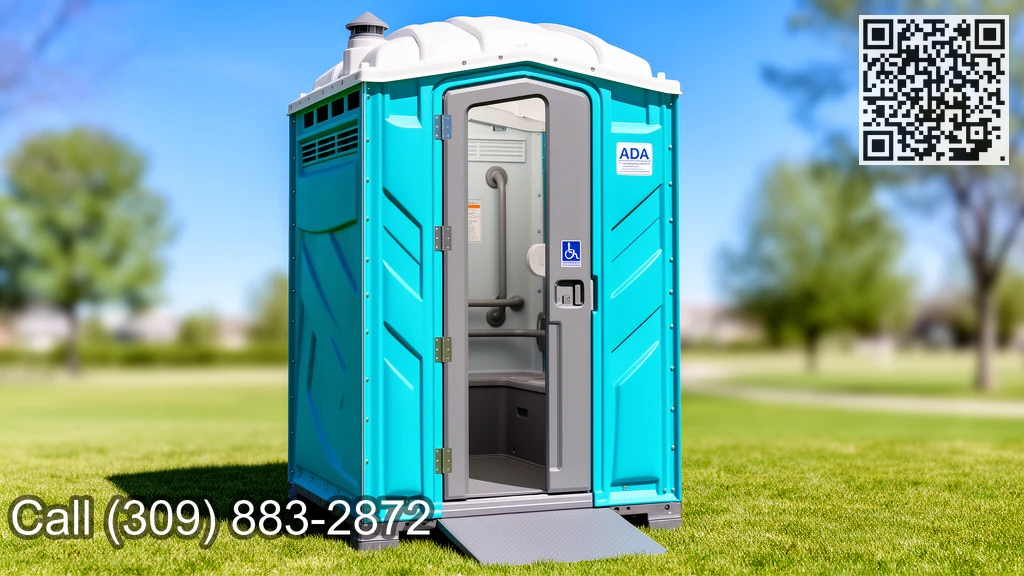
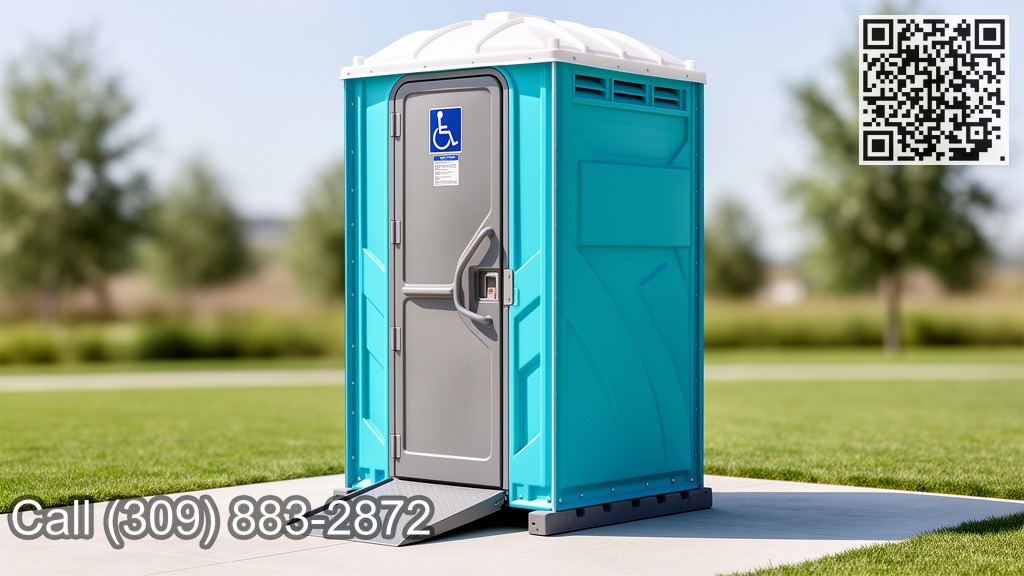
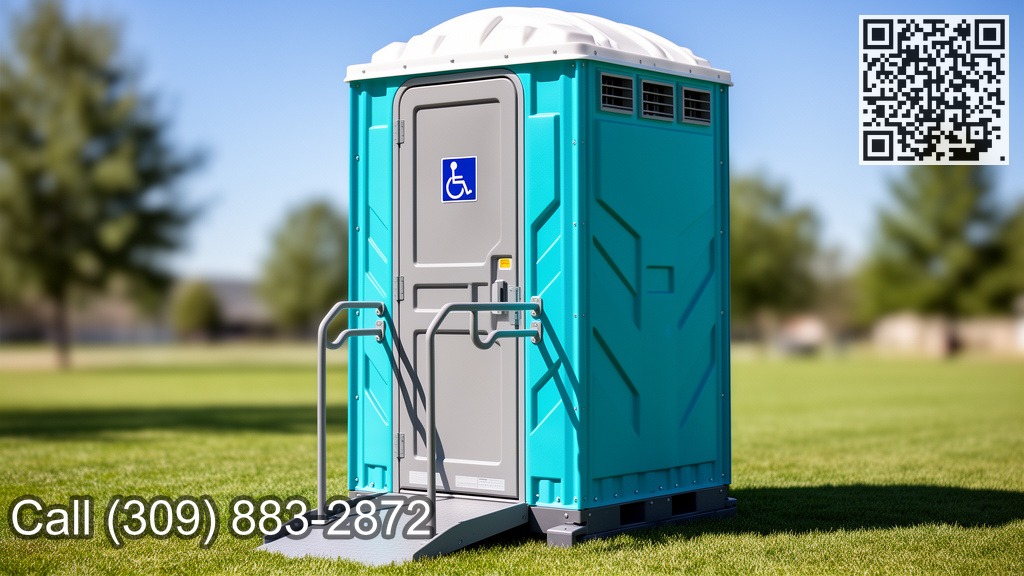
An easily accessible mobile bathroom system have to be understood the International Icon of Accessibility. It additionally must have an available course and entrance. If ramps or landings are required, those elements have to comply with ADA technical requirements. Past entering the unit, the mobile commode itself has to meet toilet-room technological demands, including component clearances, turning room, door maneuvering clearances, and appropriate guidelines for grab bars and water-closet clearances.
That is a significant difference. A roomy inside alone does not make a system certified. Neither does a sales label. Neither does a driver stating, "This is our ADA model."
In genuine work, the most dependable routine is to treat ease of access as a chain. If one web link fails, the individual experience stops working. An appropriately developed ada certified portable toilet comes to be nonfunctional if the path to it is inaccessible. A right path does not aid if the unit does not have the right internal clearances. And also a technically correct system can come to be awkward if positioning obstructs the door swing or handling area.
The course is where many setups fail
This is most likely the most common field error since it is so common. The device itself gets here compliant, yet the ground problems or bordering design reverse that compliance.
Portable restrooms usually obtain put where there is space, not where there is gain access to. That may mean a soft grassy shoulder after rainfall, loosened crushed rock, a slope that really feels workable to able-bodied team but not to mobility device customers, or a path disrupted by tubes, momentary secure fencing, cords, or crowd-control barricades.
Federal guidelines call for an easily accessible path and entry. That means the path is not an afterthought. It becomes part of the requirement. If you require a ramp or landing, that ramp or touchdown needs to adhere to ADA technological criteria too.
This is where intending very early pays off. By the time vehicles are backing in and suppliers are laying their locations, the very best accessible areas are frequently gone. The accessible unit then gets squeezed right into whatever area stays, which is exactly just how you wind up with a nominally certified system serving a noncompliant website condition.
An easy mental test aids. Picture a visitor arriving independently, without support, in a movement tool. Can they reach the unit, approach the entrance, open and utilize the door, maneuver inside, and departure without a person improvising a repair? Otherwise, the configuration most likely demands work.
Placement matters as high as procurement
I have enjoyed seasoned website teams invest lots of money on ada-compliant mobile toilets and still produce issues as a result of positioning. In some cases the concern is crowding. Occasionally it is quality. Sometimes it is poor distribution throughout a site. Normally it is a mix.
If you are setting up an ada portable toilet leasing, the rental order should never be the last availability decision. It is one step in a bigger strategy. You likewise need to make a decision where the available systems belong, how they will be come close to, what surface areas bring about them, and whether nearby objects disrupt use.
The placement discussion must occur with the same severity people give power, water, deliveries, and emergency accessibility. Mobile cleanliness often tends to obtain pressed to the end of planning, and accessibility obtains pressed throughout of sanitation preparation. That sequence causes avoidable mistakes.
One helpful strategy is to walk the site prior to the delivery date, determine every bathroom collection, and select the easily accessible area first. Afterwards, construct the rest of the cluster around it. When teams do the reverse, the accessible unit ends up being whatever can still fit, which is rarely the very best answer.
Temporary occasion does not suggest temporary responsibility
Some coordinators still think that because an occasion just lasts a day or a weekend, federal access criteria kick back. That is not just how the guideline works right here. The Gain access to Board has especially claimed the 5 percent accessible-unit need applies even at temporary events.
That issues for fairs, races, public parties, seasonal tourist attractions, outside shows, and pop-up venues. If the general public is being welcomed onto the website and mobile restroom clusters are being given, availability requires to be built right into the plan from the start.
The short-lived nature of an event can actually make conformity harder. Surfaces change. Climate turns a workable route into mud. Fence changes. Vendors increase into nearby locations. Volunteers relocate indicators or barriers. A route that seemed clear at 7 a.m. Can become obstructed by noontime. So while the legal criterion is dealt with, the operational difficulty is dynamic.
That means event-day tracking issues. Access is not only a shipment problem. It is also a site-management issue.
Construction websites call for a careful distinction
There is one location where people frequently overgeneralize. The ADA Requirements distinguish portable toilet systems at building sites used specifically by building workers. The cited 1991 basic treated those as exempt from the portable-toilet availability scoping requirement.
That exception is slim, and people sometimes defalcate it far past its context. It does not eliminate accessibility requirements for general portable commode services. It does not convert every jobsite configuration into an excluded condition. And it certainly does not relate to public events, customer-facing areas, or mobile washroom banks serving people besides building and construction personnel.
The best method to think of it is this: if you are managing basic usage mobile bathroom leasings, think the accessible-unit need uses unless you have extremely details legal premises revealing otherwise. Informal presumptions based upon "it's a work site" are dangerous, particularly when the website includes site visitors, customers, inspectors, or any type of non-construction users.
What "certified" ought to indicate when you speak to a vendor
The portable cleanliness market uses a mix of terms. You will hear ada compliant portable toilet, ada-compliant portable bathroom, ada compliant mobile commodes, and ada compliant accessible portable restrooms utilized almost interchangeably. That is understandable in average discussion, but when you are leasing, accuracy helps.
You are not just asking for a bigger model. You are requesting for a device meant to satisfy the suitable accessibility requirements and for a shipment configuration that sustains real conformity on site. Those are related, but they are not identical.
A strong vendor discussion typically covers three useful factors. Initially, confirm that the system given is the obtainable model planned for ADA use. Second, discuss where the unit will certainly be put so the course and entryway can work in the actual site conditions. Third, validate that the system will certainly be understood the International Symbol of Accessibility.
If any one of those points feel obscure in the conversation, slow down. Vague answers early usually come to be area frustrations later.
The most typical conformity errors I see
- Counting obtainable units throughout the entire website as opposed to within each washroom cluster
- Ordering an ada available mobile toilet yet putting it on an inaccessible route
- Forgetting that temporary occasions still need to fulfill the accessible-unit scoping rule
- Assuming "bigger device" immediately indicates technically compliant
- Blocking door strategy or handling room with close-by units, fence, or site equipment
None of these mistakes are dramatic by themselves, which is why they occur so often. They are preparing errors, not normally negative objectives. However from the individual's viewpoint, the impact coincides. A toilet that can not be gotten to or utilized independently is not offering its purpose.
The duty of signage and identification
Identification matters more than many teams anticipate. Obtainable units have to be noted with the International Icon of Access. That may appear obvious, yet on active sites, visible recognition minimizes complication for visitors and staff alike.
Without clear marking, people might not understand which unit is planned to be available, particularly in a huge bank where units look comparable from a distance. Staff may accidentally reroute guests improperly. Crowds might develop around the incorrect area. In low light or on an expansive occasion impact, great identification saves time and stress.
That stated, signage is not a replacement for access. I mention this since some arrangements overcompensate with labels while overlooking route and positioning. A prominent symbol on the door does not deal with an unattainable entry or missing out on maneuvering clearance.
Interior compliance is technological, and that matters
The Gain access to Board guidance makes clear that mobile bathroom devices have to meet toilet-room technological demands. That includes component clearances, transforming room, door steering clearances, and applicable grab-bar and water-closet clearance rules.
Those details are technological for a factor. They are what make independent usage possible. An individual may require room to turn, strategy, transfer, support, and run the door without awkward contortions or outside aid. If the inner format fails on those factors, the washroom might still look roomy to somebody standing in the entrance while remaining really difficult to use.
Because the validated federal context here does not provide the specific dimensional needs, it would certainly be careless to think or existing numbers casually. The functional takeaway is that buyers and renters must not rely on marketing language alone. They ought to ask for the available design meant to please ADA needs and validate that the unit specification lines up with those technical standards.
That is specifically essential when fleets vary. Some vendors have older devices, mixed supplies, or regional identifying practices that do not flawlessly line up with federal terms. "Handicap system" in a send off note is not a technical requirement. Clear verification is better.
A brief planning checklist that prevents expensive fixes
- Identify each toilet cluster on the site map before ordering units
- Reserve the easily accessible place in each cluster initially, not last
- Check the path, entry, and any kind of needed ramp or landing problems before delivery
- Confirm the system is marked with the International Symbol of Accessibility
- Recheck gain access to after configuration, especially if secure fencing, cable televisions, or climate condition change
This type of list saves cash because the most costly availability fixes are normally final fixes. Transferring units after delivery, rebuilding accessibility paths throughout an occasion, or fielding grievances as soon as guests have actually gotten here all price more than intending meticulously at the start.
Accessibility is significantly part of a larger compliance culture
Even though mobile bathroom compliance follows its own federal availability policies, it deserves observing the wider direction of enforcement. Access assumptions are not shrinking. They are coming to be more visible throughout sectors.
Recent government guidance activity around internet and mobile ease of access for state and local government entities shows that bigger environment. Various access responsibilities apply in different setups, yet the typical thread is that conformity is energetic, not inactive. Organizations that still deal with ADA concerns as technicalities lag the curve.
That wider environment influences just how portable hygiene decisions are viewed. A website group that is currently working on accessible vehicle parking, routes, entryways, ticketing, seating, https://pristineportablesil.com/service-area-bettendorf/ or digital accessibility ought to consider easily accessible mobile toilets as part of the very same operational requirement. Guests do not experience compliance in silos. They experience the website as a whole.
When judgment matters greater than minimal math
Meeting the 5 percent rule is the flooring for gathered single-user portable systems, not the ceiling of great preparation. Sometimes minimal compliance is enough. In some cases it is not.
A sprawling event with lengthy walking ranges might practically satisfy the portion while still developing practical concerns if accessible units are poorly distributed. A site offering a population that is most likely to have greater availability needs may make a decision that offering only the minimum is shortsighted. A collection near the primary entry may deserve even more interest than a lightly utilized remote bank.
That is not inventing a brand-new federal policy. It is just operational judgment. Great planners comprehend the distinction between bare minimum scoping and a setup that actually works well under genuine conditions.
I have seen organizers prevent a lot of anxiety by asking one gentle concern early: if a guest utilizing a wheelchair arrives during height web traffic, where will they realistically go, and what will that experience feel like? That question tends to reveal design problems much faster than abstract compliance talk.
Better toilet gain access to normally comes from earlier conversations
The smoothest available toilet setups often share the same characteristic. Someone brought the problem up early, prior to trucks rolled, before staking, prior to fencing, prior to the best level areas were taken.
That early conversation does not need to be dramatic. It just needs to be details. How many collections exist? Which units in each cluster will come? What route gets a person there? Is the entryway usable in the actual website condition, not the optimal one? Will the unit be plainly recognized? Has any individual thought of what occurs if it rains?
Those are regular preparation inquiries. But when they are left unanswered, the outcome is commonly a website that practically attempted and virtually failed.
The good information is that easily accessible mobile washroom conformity is convenient when groups treat it as part of the site strategy, not as a last-minute add-on. If you are ordering an ada portable bathroom or numerous ada certified portable washrooms, focus on the full chain: the ideal number in each cluster, the appropriate device, the right path, the ideal entryway, the right inner functions, and the ideal identification.
That is what government conformity resembles on the ground. More important, it is what regard for your guests resembles too.
 Ask ChatGPT
 Ask Grok
 Ask Perplexity
 Ask Claude
 Ask Google AI
 Ask You